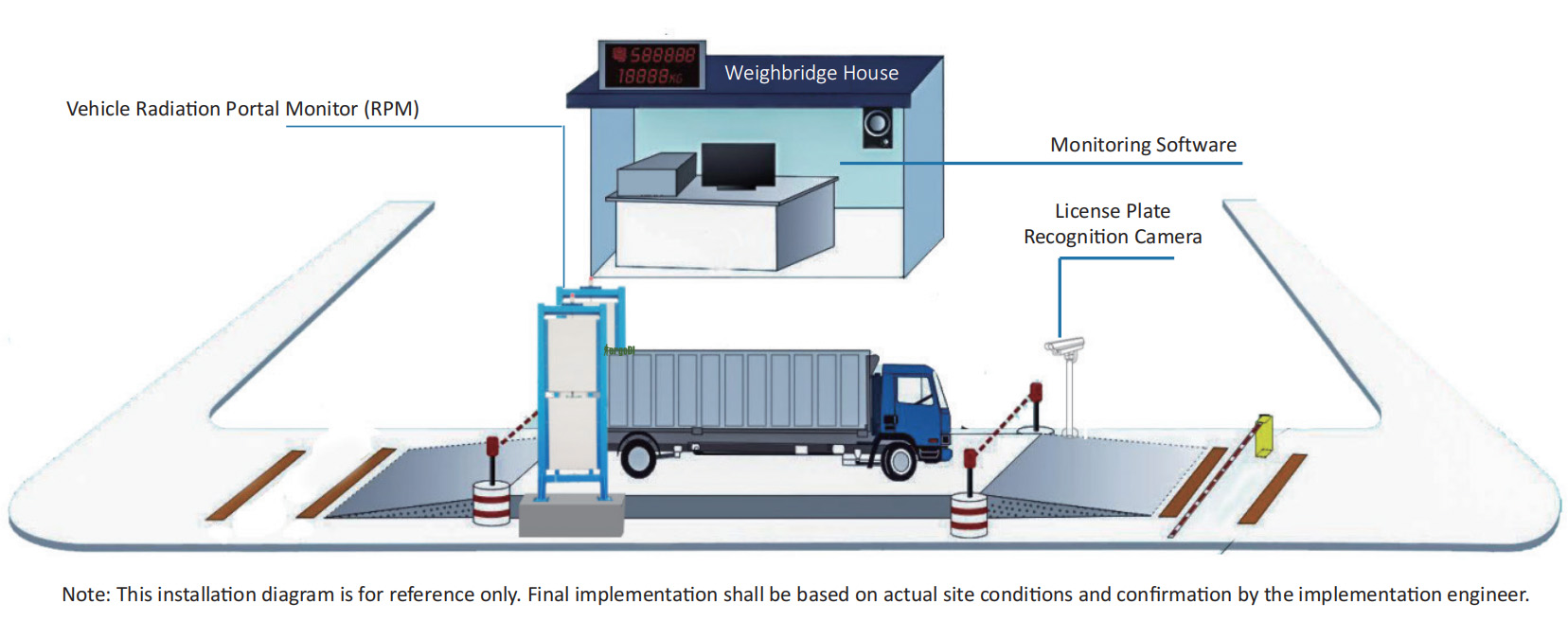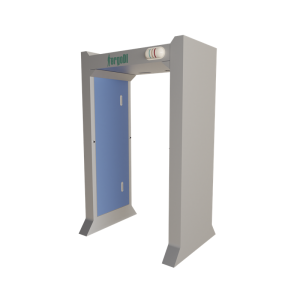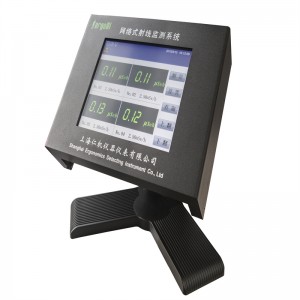


The RJ11-2050 Vehicle Radiation Portal Monitor (RPM) is primarily used to monitor if there are radioactive materials carried by trucks, container vehicles, trains, and if other vehicles contain excessive radioactive substances. The RJ11 Vehicle RPM is equipped with plastic scintillators by default, with sodium iodide (NaI) and ³He gas proportional counter as optional components. It features high sensitivity, low detection limits, and rapid response, enabling real-time automatic monitoring of various passageways. Combined with auxiliary functions such as vehicle speed detection, video surveillance, license plate recognition, and container number identification (optional), it effectively prevents the illegal transportation and spread of radioactive materials. It is widely used for radioactive monitoring and control at exits and entrances of nuclear power plants,customs,airports, railway stations, etc. The monitoring system complies with the relevant requirements of the Chinese standard GB/T 24246-2009 "Radioactive and Special Nuclear Material Monitoring Systems". The optional radionuclide identification module complies with the relevant requirements of the Chinese standard GB/T 31836-2015 "Spectrometry-Based Portal Monitors Used for the Detection and Identification of Illicit Trafficking of Radioactive Material".
|
Model |
Detector Type |
Detector Volume |
Equipment |
Recommended Monitoring |
Recommended Monitoring |
Permissible Vehicle |
|
RJ11-2050 |
Plastic Scintillator |
50 L |
2.6 m |
(0.1~3.5) m |
5.0 m |
(0~20)km/h |
Healthcare, Recycling Resources, Metallurgy, Steel, Nuclear Facilities, Homeland Security, Customs Ports, Scientific Researchs/Laboratories, Hazardous Waste Industry, etc.
Standard Essential System Hardware Components:
(1)y Detection Module: Plastic scintillator + low-noise photomultiplier tube
➢ Support Structure: Upright columns and waterproof enclosures
➢ Detector Collimation: Lead shielding box with 5-sided lead surrounding
➢ Alarm annunciator: Local and remote audible & visual alarmsystems, 1 set each
➢ Central Management and Control System: Computer, hard disk,database, and analysis software, 1 set
➢ Transmission Module: TCP/lP transmission components, 1 set
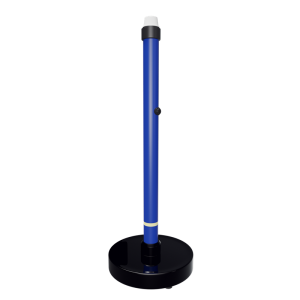
➢ Occupancy and Passage Speed Sensor: Through-beam infrared speedmeasurement system
➢ License Plate Recognition: High-definition night vision continuous video& photo capture device, 1 set each
Optional Auxiliary System Components:
➢ Radionuclide ldentification Module: Large-volume sodium iodide (Nal)detector+ low-noise photomultiplier tube
➢ Probe-side Analysis Device: 1024-channel multichannely spectrumanalyzer
➢ Support Structure: Upright columns and waterproof enclosures
➢ Detector Collimation: Lead shielding box with 5-sided lead surroundingNeutron
➢ Detection Module: Long-life He-3 proportional counters
➢ Neutron Moderator: Polypropylene-ethylene moderator
➢ ySelf-Calibration Device: Low-activity natural radioactive mineral box (non-radioactive source),1 unit each
➢ SMS Alarm System: SMS text message alarm system, 1 set each
➢ Vehicle Passage Management: On-site barrier gate system, 1 set each
➢ On-site Display System: Large-screen LED display system, 1 set each
➢ On-site Broadcast System: Microphone + loudspeaker, 1 set each
➢ Voltage Stabilization and Backup Power Supply: Uninterruptible powersupply(UPS), 1 set each
➢ Container Number Recognition: High-definition scanner forstoring container numbers and other information, 1 set each
➢ Personnel Protective Equipment: Protective clothing and personal dosealarm radiometers, 1 to 2 sets
➢ On-site Source Search Device: Portable n, y survey meter 1 unit
➢ Hazardous Material Handling Equipment: Large lead-equivalent sourcecontainer, 1 unit; Extended-length radioactive source handling tongs, 1 pair
➢ Equipment Installation Foundation: Reinforced concrete base, steel platform, 1 set
1. BlN (Background ldentification of Normal) Background Neglect Technology
This technology enables high-speed detection of lowlevel artifcial radioacive materials even in high radiation background environments, with a detectiontime as fast as 200 milisecond. lt alows for the detection of radioactive materials while vehicles are moving at high speeds, making it suitable for rapidinspection. Simultaneously, it ensures the device does not generate false alarms due to signifcant increases inbackground radiation. Furthermore, itcompensates for the reduchion in background count rate caused bythe shielding of natural radiation when a vehicle occupies the detection zone, enhancingthe authenticity of inspection results and improving the probabilty of detecton. This is paricularly beneicialfor detecting weak radioactive sources.
2. NORM Rejection Function
This function is used to identify and distinguish Naturally Occurring Radicacive Materials (NORM) lt assists operators in determining whether an alarm istriggered by artificial or natural radioactive substances.
3. Characteristic SlGMA Statistical Algorithm
Using the characteristic SIGMA alkorithm, users can easily adjust the relatonship between the device's detecton sensitivity and the probabiity of false alarmsIt allows for increasing sensitivity to detect extremely weak radioachve sources (e.g., lost sources) in specific scenarios, or prevening false alarms duringlong-term continuous monitoring, providing precise control.
|
Item Name |
Parameter |
||||||||||||||||
|
Plastic-Based γ Detector |
➢ Detector Type: Plate-type plastic scintillator + low-noise photomultiplier tube ➢ Detector Volume: 50 L ➢ Dose Rate Range: 1 nSv/h - 6 μSv/h ➢ Energy Range: 40 keV - 3 MeV ➢ Sensitivity: 6240 cps / (μSv/h) / L (relative to ¹³⁷Cs) ➢ Lower Limits of Detection: Capable of detecting radiation 5 nSv/h above background (0.5 R/h) ➢ Self-Calibration: Low-activity natural radioactive mineral box (non-radioactive source) |
||||||||||||||||
|
System Detection Sensitivity |
➢ Background: Gamma reference background 100 nGy/h, Neutron background ≤ 5 cps (system count rate) ➢ False Alarm Rate: ≤ 0.1 % ➢ Source Distance: Radioacve source is 2.5 meters from the detecon surface ➢ Source Shielding: Gamma source unshielded, Neutron source unmoderated (i.e., tested using bare sources) ➢ Source Movement Speed: 8 km/h ➢ Source Acvity Accuracy: ± 20 % ➢ Under the above condions, the system can detect radioacve materials with the acvity or mass listed below
|
||||||||||||||||
|
Support Structure |
➢ Ingress Protecon Rang: IP65 ➢ Column Dimensions: 150mm×150mm×5mm square steel column ➢ Surface Treatment Process: Overall powder coang with chrysanthemum pattern ➢ Collimator Lead Equivalent: 5 sides with 3 mm leadanmony alloy + 5 sides wrapped with 2 mm stainless steel ➢ Total Height Aer Installaon: 4.92 meters |
||||||||||||||||
|
Central Control Management |
➢ Computer: i5 or above brand computer / CPU with ARM architecture ➢ Computer System: WIN7 or above / Kylin OS ➢ Hard Disk: 500 GB data capacity ➢ Data Storage Period: ≥ 10 years |
||||||||||||||||
|
Soware Specificaons |
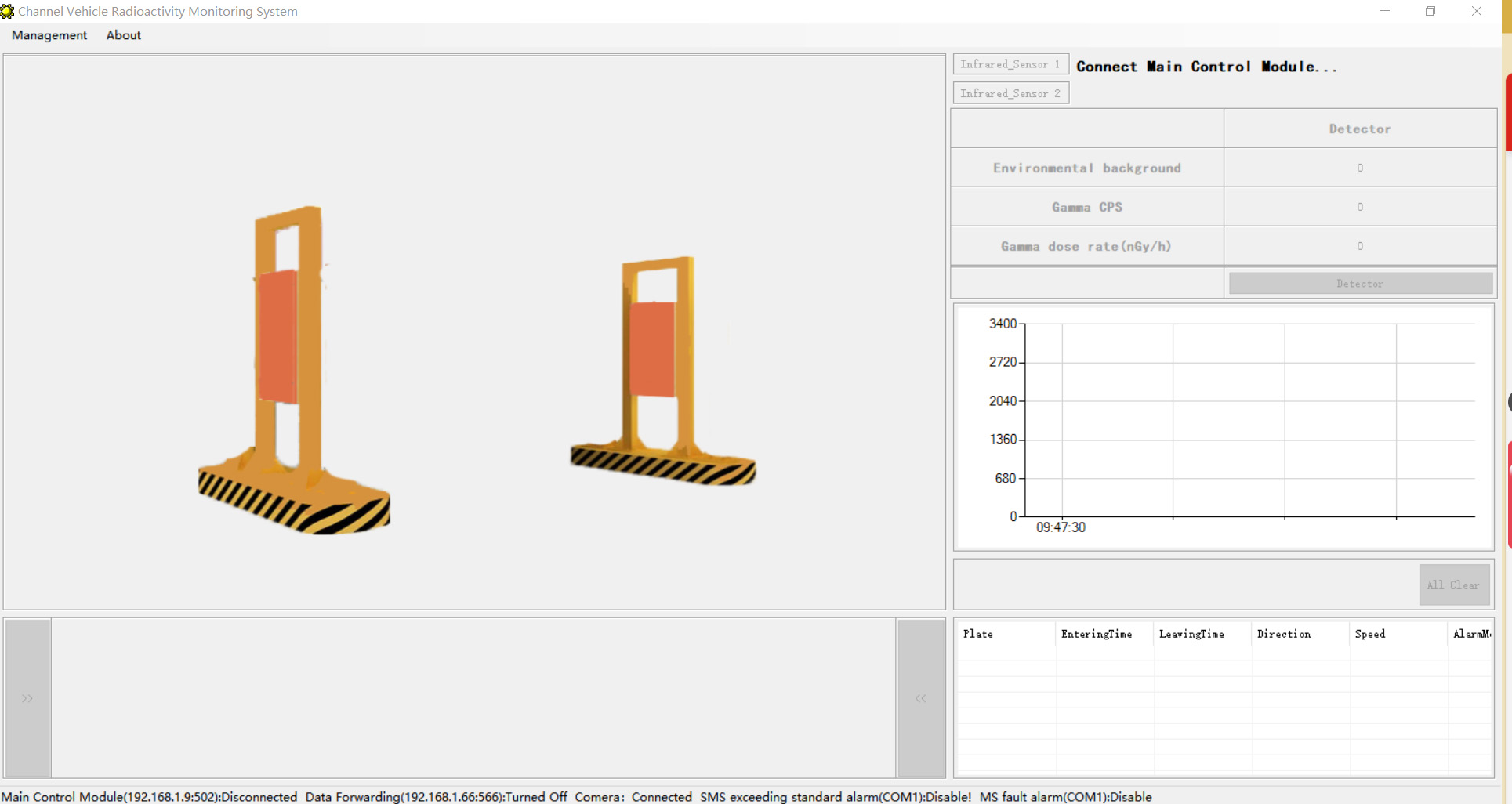
➢ Report Format: Generates Excel spreadsheets for permanent storage; different alarm types are disnguished by color. ➢ Report Content: The system can generate inspecon reports. The report content includes vehicle entry me, exit me, license plate number, container number (optional), radiaon level, alarm status (yes/no), alarm type, alarm level, vehicle speed, background radiaon level, alarm threshold, and other informaon. ➢ Operang Plaorm: The soware supports cross-plaorm operang systems (Windows & Kylin). ➢ Count Display Method: Digital display combined with real-me waveform display. ➢ On-site Control: Allows authorized personnel to input conclusions for each inspecon result. ➢ Database: Users can use keyword to searche. ➢ Management Permissions: Authorized accounts can access the backend expert mode. ➢ Allow authorized personnel to edit and process detecon records. ➢ Real-me camera monitoring, with video playback of host computer alarm records (oponal). ➢ Data can be integrated into the customs system for unified supervision (oponal). |
||||||||||||||||
|
Systemic Specificaons |
➢ System Sensivity Consistency: Variaon of γ sensivity along the height direcon of the monitoring zone ≤ 40 % ➢ NORM Rejecon Funcon: Capable of discriminang natural radionuclides (⁴⁰K) in cargo ➢ n, γ Detecon Probability: ≥ 99.9 % ➢ n, γ False Alarm Rate: ≤ 0.1 ‰ (one in ten thousand) ➢ Monitoring Zone Height: 0.1 m ~ 4.8 m ➢ Monitoring Zone Width: 4 m ~ 5.5 m ➢ Vehicle Speed Monitoring Method: Dual-sided infrared through-beam ➢ Permissible Vehicle Speed: 0 km/h ~ 20 km/h ➢ Electronic Barrier Gate: Gate liing me ≤ 6 seconds, can be lied manually aer power failure (oponal) ➢ Video Surveillance: High-definion night vision camera ➢ SMS Alarm System: Full-network compable, customer provides SIM card ➢ Single-Pass Container Number Recognion Rate: ≥ 95 % ➢ Single-Pass License Plate Recognion Rate: ≥ 95 % ➢ Alarm Sound Level: On-site 90 ~ 120 dB; Control Center 65~90 dB ➢ Alarm Threshold and False Alarm Rate Adjustment: Connuously adjustable via the SIGMA Key value ➢ Data Transmission Method: Wired TCP/IP mode ➢ Overspeed Vehicle Alarm: Features vehicle overspeed alarm with informaon display; alarm trigger speed is configurable ➢ Radioacve Source Localizaon Funcon: System automacally indicates the posion of the radioacve source within the vehicle compartment ➢ On-site Large Screen LED Display Size:0.5m×1.2m (oponal) ➢ On-site Broadcast System: ≥ 120 dB (oponal) ➢ Backup Duraon during Power Outage: Monitoring terminal backup duraon > 48 hours (oponal) ➢ The equipment meets the requirements for γ and neutron detecon efficiency of gate-type vehicle monitoring systems specified in the naonal standard "Radioacve Material and ➢ Special Nuclear Material Monitoring Systems" GB/T 24246-2009. ➢ Meets the requirements for neutron and γ detecon efficiency of gate-type vehicle monitoring systems specified in the IAEA 2006 publicaon "Technical and Funconal Specificaons for Border Monitoring Equipment" and IAEA-TECDOC-1312. ➢ Requirements for neutron and γ detecon efficiency in portal vehicle monitoring systems ➢ Compliance with relevant standards: GB/T 24246-2009 Radioacve Material and Special Nuclear Material Monitoring Systems GB/T 31836-2015 Radiaon Protecon Instrumentaon—Spectroscopy-Based Portal Monitoring Systems for the Detecon and Idenficaon of Illicit Trafficking of Radioacve Materials JJF 1248-2020 Calibraon Specificaon for Vehicle-Mounted Radioacve Monitoring Systems |